




What is a Regional Center?
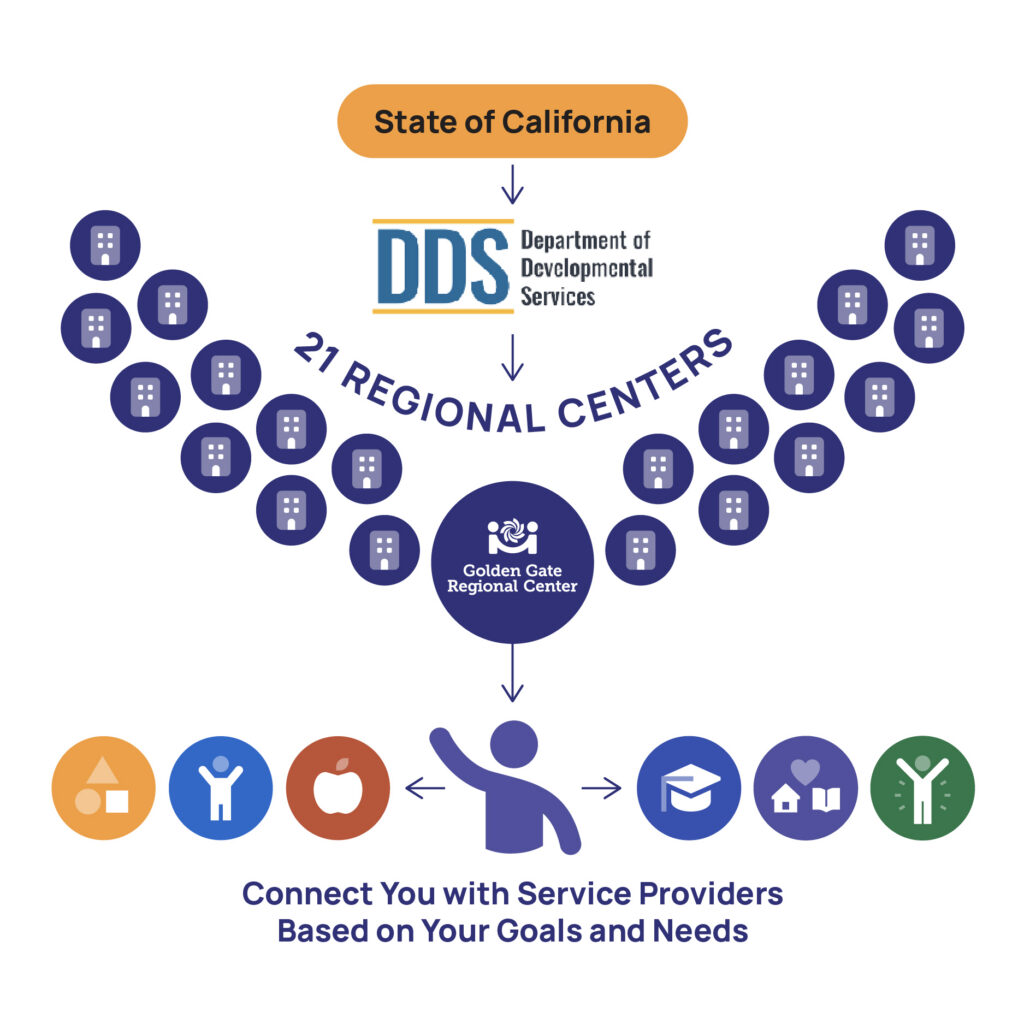
Regional centers are a network of 21 publicly funded, private, non-profit agencies across the state of California. They coordinate and deliver services to individuals with intellectual and developmental disabilities (I/DD). Regional centers are funded by the California Department of Developmental Services (DDS) to work with individuals with I/DD of all ages, from infants to seniors, connecting them to the services they need.

What is the Lanterman Developmental Disabilities Services Act?
The Lanterman Developmental Disabilities Services Act (often called “The Lanterman Act”) outlines:
- The rights and responsibilities of people with developmental disabilities
- The agencies that plan and coordinate services and supports for these individuals and their families
The Lanterman Act shows California’s commitment to help people with developmental disabilities. Section 4501 of the California Welfare and Institutions Code states:
“The State of California accepts a responsibility for persons with developmental disabilities and an obligation to them which it must discharge. Affecting hundreds of thousands of children and adults directly, and having an important impact on the lives of their families, neighbors and whole communities…
…Services and supports should be available to enable persons with developmental disabilities to approximate the pattern of everyday living available to people without disabilities of the same age. Consumers of services and supports, and where appropriate, their parents, legal guardian, or conservator, should be empowered to make choices in all life areas…”
Because of these laws, the Lanterman Act creates a process for people with developmental disabilities to choose services and supports that will help them live similarly to their peers without disabilities. California’s 21 regional centers are the key agencies in this process that put the law into action.
What responsibilities does the Lanterman Act assign to regional centers?
The Lanterman Act assigns several duties and responsibilities to regional centers, including:
- Outreach activities to identify persons who may need regional center services
- Assess and evaluate if someone is eligibie for regional center services
- Provide preventive services for babies and toddlers with a high risk of having a developmental disability
- Develop Individual Program Plans (IPPs) through a person-centered planning process
- Coordinate services and supports to help individuals meet their IPP goals
- Create flexible and individualized services and supports, to encourage people to get involved in their communities
- Ensure the services being provided are quality and effective
- Advocating for the civil, legal and service rights of individuals served
Additionally, the Lanterman Act requires that regional centers responsibly manage the money they receive to provide services and supports. A regional center must:
- Operate within its budget
- Find innovative and cost-effective ways to achieve desired outcomes for individuals and families served
- Secure services and supports from qualified service providers
- Consider parental responsibility when making decisions about the purchase of services or supports for minors
- As stated in the Welfare and Institutions Code, be the payor of last resort, seeking out all possible funding options before spending regional center funds
- Ensure they do not pay for services or supports that should be provided by other programs or agencies (Department of Education, Medi-Cal, Social Security, etc.)
For more details about regional centers and the Lanterman Act, see A Guide to California’s Regional Center Services System, which is now available in a variety of languages on the California Department of Developmental Services (DDS) website.
What is the California Early Intervention Services Act?
The California Early Intervention Services Act, along with the Individuals with Disabilities Education Act (IDEA), created the Early Start program. Early Start delivers early intervention services to infants and toddlers (up to 36 months of age) with a developmental delay or for whom there are established risk conditions (or high-risk factors) that could lead to a delay.


What is the Department of Developmental Services?
The California Department of Developmental Services (DDS) is a department of our state government that regulates the regional centers under both the Lanterman and Early Intervention Services laws. As part of its duties, DDS maintains performance contracts with each of California’s 21 regional centers to make sure they are following through on the state’s commitment to people with developmental disabilities.